
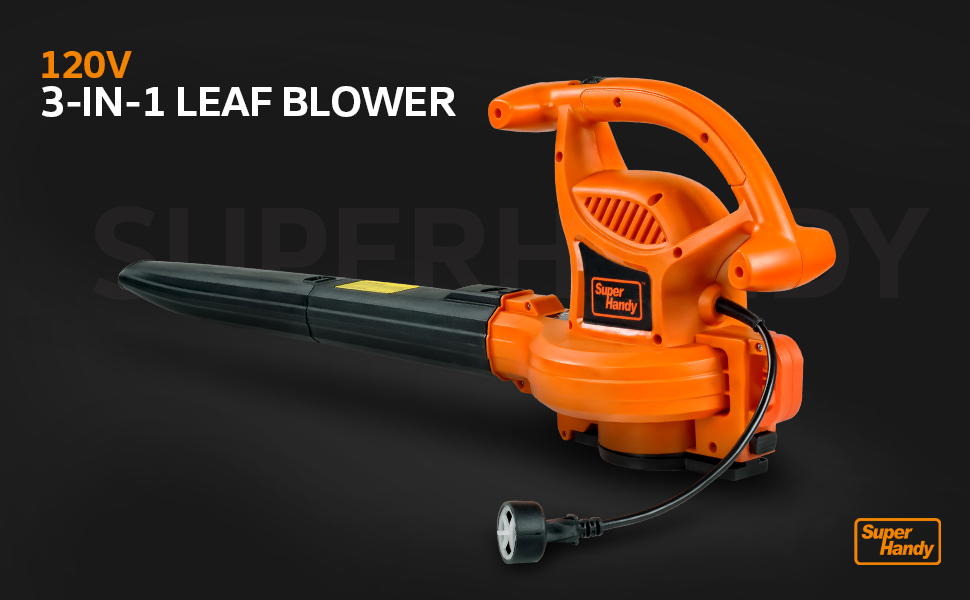
You want the right leaf blower for your garden, but choosing the right leaf blower can seem tricky. Many people pick the wrong leaf blower for their needs. Think about your garden size and how often you will use your leaf blower. You should match your leaf blower to your tasks. If you use the wrong speed or try to clear wet leaves, you might not get good results. You might even damage your leaf blower. Always look for a leaf blower that fits your needs, so you clear leaves and debris with less effort.
Key Takeaways
-
Work out how big your garden is and pick a leaf blower that fits. Handheld models are good for small gardens. Backpack blowers are better for bigger spaces.
-
Think about what kind of debris you need to clear. Use a high-powered petrol blower for wet leaves or heavy debris. For lighter jobs, a cordless or electric model will do.
-
Think about how often you will use the leaf blower. If you use it a lot, get a strong model. Choose one with comfortable features for long use.
Leaf Blower Types
Handheld Leaf Blower
A handheld leaf blower is easy to use. It works well for small and medium gardens. This leaf blower is light and simple to carry. You can clear leaves from patios and driveways. It also works for flower beds. Handheld blowers are best for dry leaves and light debris. If you want a leaf blower for quick jobs, this type is a good choice.
Backpack Leaf Blower
Backpack blowers help with bigger gardens or heavy debris. You wear the blower on your back. This spreads the weight and feels more comfortable. These blowers have more power than handheld ones. You can use a petrol backpack blower for wet leaves. It also works for thick piles. Many professional leaf blowers are backpack designs.
Corded Electric Leaf Blower
Corded electric leaf blowers give steady power. You plug them into a socket. You never run out of energy. These blowers work well for small areas. You must stay close to a power source. This limits how far you can go. Corded-electric blowers are quiet. They are easy to look after.
Cordless Leaf Blower
Battery-powered blowers let you move freely. You do not need a cord. You can reach every part of your garden. These blowers are quieter and better for the environment. You may need to recharge the battery after a while.
Petrol Leaf Blower
Petrol leaf blowers are good for big gardens and tough jobs. They have strong power and no cords. These blowers can be heavy and noisy. Petrol blowers work well for wet leaves and big piles. Many professionals use petrol backpack leaf blowers.
Multi-functional leaf blowers can blow, vacuum, and mulch. You can change modes easily. These models help you clear leaves and collect debris. They also shred it for compost. You save time and effort with a multi-functional leaf blower.
|
Leaf Blower Type |
Advantages |
Disadvantages |
|---|---|---|
|
Cordless Leaf Blower |
Good for the environment, easy to look after, quieter |
Battery does not last long |
|
Electric Leaf Blower |
Power does not stop, good for small areas |
Needs a power source, you cannot move far |
|
Petrol Leaf Blower |
Very strong, good for big gardens, no battery or cord |
Noisy, heavy, makes fumes |
|
Handheld Blower |
Handy, best for small and medium gardens |
Not as strong as other types |
|
Backpack Blower |
Stronger, comfy for big gardens |
Can be heavy and make you tired |
|
Walk-Behind Blower |
Very fast air, best for huge areas |
Usually petrol, loud, makes fumes |
Key Buying Factors
Power and Airspeed (CFM/KM/H)
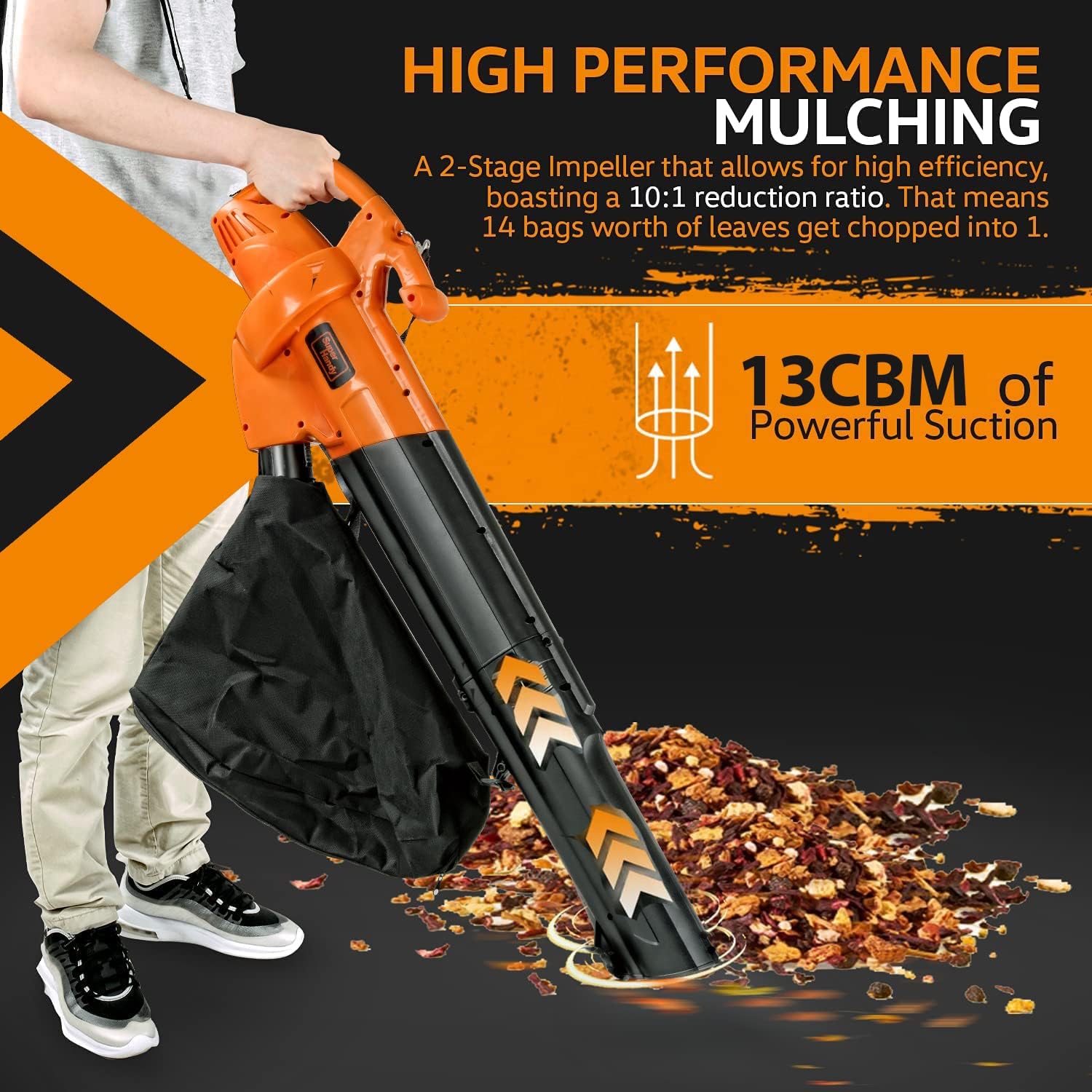
It is important to check power and airspeed. These numbers show how much air the leaf blower moves. They also show how fast it blows. If you want to clear wet or heavy debris, pick a strong model. The Superhandy Leaf Blower has a powerful 230V 2400W 2-Speed electric Motor providing outstanding results of Max Output Air Volume/Speed of 13CBM, 270KM/H, 10:1 reduction ratio. These models work well in autumn when leaves fall a lot. You can use less airspeed for light debris in spring or summer.
Noise Levels
Noise is important, especially in places where people live. Many areas have rules about how loud leaf blowers can be. Most daytime limits are 65-75 decibels. At night, the limit is lower at 55-65 decibels. You should check your local rules before buying. Quieter leaf blowers help you not disturb neighbours.
-
Noise rules set the loudest sound allowed for leaf blowers.
-
Daytime limits are usually 65-75 decibels.
-
Night limits are often 55-65 decibels.
Features and Controls
Leaf blower features help make your job easier. Some models have adjustable fan speeds, comfy straps, and bags for collecting leaves. Multi-functional leaf blowers can vacuum and mulch leaves. You can change modes quickly. More wattage means more power. Lower sound levels mean the machine is quieter. These things help you pick the best model for your garden.
|
Feature |
Description |
|---|---|
|
Air Volume and Air Flow Speed |
More air volume (CFM) and faster speed (MPH) give better results. |
|
Wattage |
More wattage means more power but uses more energy. |
|
Sound Levels |
Lower dB ratings mean the machine is quieter. |
|
Fan Speeds |
Different settings let you change power for different jobs. |
|
Straps |
Comfy straps make it easier to use for longer. |
|
Mulching |
Shreds leaves so you can throw them away or compost them. |
|
Collection Bags |
Good for picking up and throwing away leaves. |
|
Modes |
You can switch between vacuuming and blowing for more options. |
Tip: Pick a leaf blower with easy controls and a comfy design. It will be easier to use and feel better for long jobs.
Leaf Blower Buying Guide
Matching Blower to Garden Size
Choosing the right leaf blower for your garden starts with understanding the size of your outdoor space. You need a model that matches the area you want to clear. If you have a small garden, a handheld leaf blower works best. It is light and easy to move. For gardens under 1500 square metres, a 3000w electric leaf blower vacuum is recommended. The collection bag should hold around 40 litres, especially if you want to mulch leaves.
If you have a medium or large garden, you may need a backpack or walk-behind leaf blower. These models offer more power and help you tackle bigger cleanup jobs. You should also think about the volume of leaves you clear each year. If you have many trees, you will need a stronger blower. Consider other cleaning tasks, such as clearing patios or driveways. Sensitivity to noise matters, especially in residential areas. Budget is important, so set a limit before buying a leaf blower. If you are a professional, you may need a model with extra features.
Key points to consider when matching a leaf blower to garden size:
-
Check the size of your garden and the amount of leaves you clear each year.
-
Think about other cleaning tasks, such as patios or driveways.
-
Consider how much noise you can tolerate.
-
Decide how much you want to spend.
-
If you work as a professional, look for advanced specifications.
Handheld leaf blowers suit most home gardens. They are portable and efficient for small spaces. You can use them for quick cleanup without feeling tired.
Choosing for Debris Type
The type of debris in your garden affects which leaf blower you should buy. You may find fallen leaves, grass clippings, twigs, branches, and even fruit peels during cleanup. Some gardens have wood chips, kitchen scraps, or animal manure from herbivores. If you only need to clear dry leaves and grass cuttings, a general blower or electric blower vacuum works well. For heavier debris, such as wet leaves or twigs, you need a high-powered leaf blower.
|
Leaf Blower Type |
Suitable For |
Notes |
|---|---|---|
|
Electric blower vacuum |
Lighter materials (leaves) |
Not ideal for picking up acorns |
|
High-powered blower/vac |
Leaves and light debris |
Not ideal for large gardens |
|
General blower |
Dry leaves, grass clippings |
Challenging for wet or heavy debris |
If you want to compost grass cuttings or flowers, choose a leaf blower with a mulching function. This feature helps you reduce the volume of debris and makes cleanup easier.
Buying Considerations
Budget and Value
When you start buying a leaf blower, you need to think about your budget. Prices can vary from under £50 for basic models to over £300 for professional machines. Cheaper leaf blowers suit small gardens and light jobs. You get simple controls and less power. If you spend more, you get stronger motors, better build quality, and extra features like vacuum and mulching modes. You should compare what you need with what you can afford. Sometimes, the best leaf blower for your garden is not the most expensive one. Look for a model that gives you good value and matches your garden size.
|
Price Range |
Features |
Suitable For |
|---|---|---|
|
Under £50 |
Basic, light, simple controls |
Small gardens |
|
£50 - £150 |
More power, extra features |
Medium gardens |
|
Over £150 |
High power, multi-function, durable |
Large gardens, frequent use |
Maintenance and Longevity
You keep your leaf blower working well by looking after it. Regular care helps your machine last longer and work better. Here are some tips for different types:
-
Clean out leaves and dust after each use to keep power strong.
-
Take care of the battery in cordless models. Store it indoors and avoid letting it run flat.
-
Inspect the cable on corded models for damage before you start.
-
Use fresh fuel and the right oil mix for petrol leaf blowers.
-
Check and clean the air filter often.
-
Tighten loose screws and bolts to stay safe.
-
Store batteries away from heat and moisture during winter.
-
Avoid stones or hard debris when using the vacuum mode.
-
Use the shoulder strap to prevent dropping your leaf blower.
If you follow these steps, you help your leaf blower last longer and avoid costly repairs.
Eco-Friendly Options
You help the environment when you choose an electric leaf blower. Electric and cordless models produce no fumes and make less noise. These machines suit gardens in quiet neighbourhoods. You also protect your hearing and reduce vibration. Many electric leaf blowers offer multi-function features, such as vacuum and mulching. You get a cleaner garden and help nature at the same time. If you want the best leaf blower for eco-friendly use, look for models with low emissions and quiet operation.
Tip: Electric leaf blowers are safe, green, and easy to maintain. You make a smart choice for your garden and the planet.
Choosing the right leaf blower depends on your garden size, debris, and how often you use it.
|
Key Factor |
Recommendation |
|---|---|
|
Garden Size |
Pick a model that matches your space. |
|
Debris Type |
Choose power for wet or dry leaves. |
|
Usage Frequency |
Select durability for frequent use. |
For safe and effective use, always:
-
Wear goggles and gloves.
-
Clear the area before starting.
-
Store your leaf blower in a dry place.
-
Clean filters and check for blockages.
Your preferences matter most. The best leaf blower is the one that fits your needs. Use these final buying tips to make the right choice.
FAQ
What is the best leaf blower for small gardens?
You should choose a handheld leaf blower for small gardens. It suits quick cleaning tasks and offers easy control. Corded electric leaf blowers also work well in compact spaces.
How do I match a leaf blower to my specific situation?
You need to check your garden size, debris type, and usage frequency. The leaf blower buying guide helps you find the right leaf blower for your needs and cleaning tasks.
Are petrol backpack blowers better for heavy debris?
Petrol backpack blowers provide high performance for wet leaves and thick piles. You get strong power for large gardens and professional cleaning tasks.