
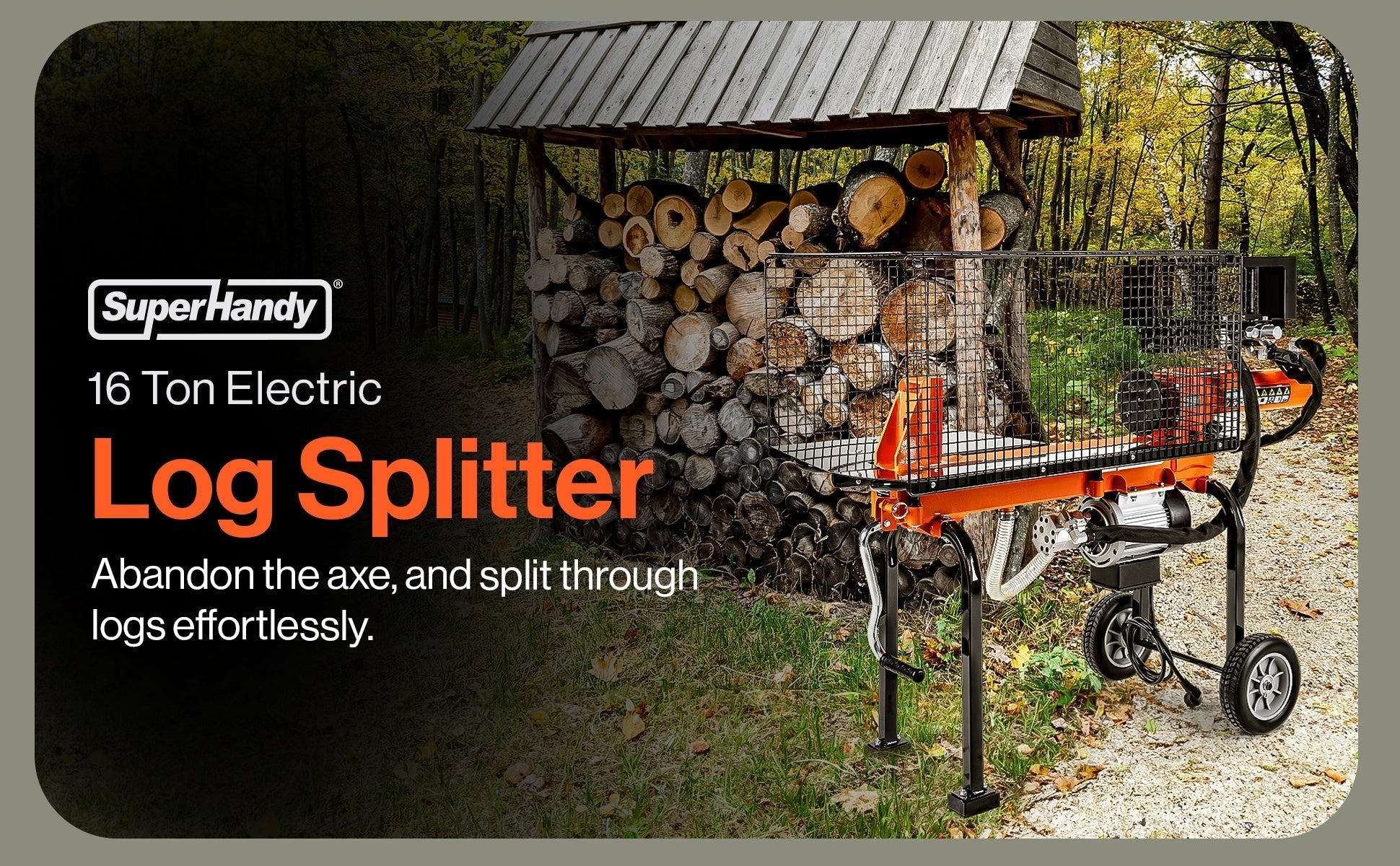
You should pick a log splitter that fits what you need. This helps you stay safe and work better.
-
You do not have to lift heavy logs by yourself.
-
You can split big logs easily because of the machine.
-
You keep logs steady and safe while you use it.
Key Takeaways
-
Pick a log splitter that fits your wood type and its condition. Hardwoods need more power than softwoods.
-
Think about the size of the logs you want to split. Make sure the log splitter can handle the length and width of your logs. This helps you use it safely and easily.
-
Check for important features like how easy it is to move and safety tools. A good log splitter should be simple to carry and have safety guards.
Choosing a Log Splitter: Key Factors
When you start choosing a log splitter, you need to look at a few important things. These include the type and condition of your wood, the size of the logs, and how often you plan to split wood. Each factor helps you find the right machine for your needs.
Wood Type and Condition
You must check what kind of wood you want to split. Hardwoods like oak or ash need more force than softwoods such as pine. Wet wood, or wood with high moisture, is harder to split and burns poorly. Dry wood splits more easily and burns better in your stove or fireplace.
Tip: Splitting logs increases their surface area. This helps moisture escape, so your firewood dries faster and burns more efficiently.
You should aim for well-seasoned or kiln-dried logs with moisture content at 20% or less. If you often split green or freshly cut wood, you need a more powerful log splitter. For dry, seasoned logs, a smaller machine may work well.
-
High moisture in wood (above 20%) makes burning less efficient.
-
Splitting logs helps them dry out faster.
-
Well-seasoned logs are best for immediate use.
The type and size of firewood you use will guide your choice. If you handle mixed wood types, pick a log splitter that can manage both hard and soft woods.
Log Size and Frequency
You also need to think about the size of the logs you want to split. The diameter and length of your logs will decide how much power you need.
If you split large logs, you need a stronger log splitter. For smaller logs, a lighter machine will do the job.
How often you use your log splitter matters too. If you split wood every week, you need a durable machine. If you only split wood a few times a year, a basic model may be enough.
|
Log Splitter Type |
Maintenance Needs |
Durability |
|---|---|---|
|
Petrol |
Needs regular engine checks, oil changes, and fuel care. |
Very durable, handles tough jobs, but needs more maintenance. |
|
Electric |
Needs little maintenance, just keep the motor clean. |
Less maintenance, good for easy use, but not for heavy-duty use. |
Note: Features like adjustable splitting knives and real-time performance tracking help you handle different wood types and sizes. These features also make your work easier if you split wood often.
When you consider all these factors—wood type, log size, and how often you split—you make a smart choice. You get a log splitter that matches your needs, saves you time, and keeps you safe.
Different Types of Log Splitters
When you look at log splitters, you see many choices. Each kind is made for a certain job and person. The table below shows the main types and what they are best for:
|
Type |
Power Source |
Typical Use Cases |
|---|---|---|
|
Manual |
Manual |
Small logs, needs physical effort |
|
Electric |
Electric |
Larger logs, needs a power source nearby |
|
Petrol |
Petrol |
Large, fresh logs, more maintenance |
|
Hydraulic |
Hydraulic |
Traditional, slower reset time |
|
Kinetic |
Kinetic |
Fast, less maintenance, no oil needed |
Horizontal vs Vertical
You can pick horizontal or vertical log splitters. Horizontal splitters are good for small and medium logs. You put the log on the side and split it. Vertical splitters are better for big logs. You roll the log in and split it while it stands up.
|
Feature |
Horizontal Splitters |
Vertical Splitters |
|---|---|---|
|
Speed |
Fast for small logs |
Efficient for tough, large logs |
|
Safety |
Safer for small logs |
Safer for large logs |
|
Cost |
Less expensive |
More expensive |
|
Ease of Use |
Needs bending down |
Easier on your back |
|
Log Size |
Up to 250 mm |
Up to 600 mm |
|
Splitting Force |
Lower, good for home use |
Higher, good for heavy use |
Electric, Petrol, and Manual
There are three main ways to power log splitters: electric, petrol, and manual. Electric splitters are quiet and clean. They are easy to use but need a plug. Petrol splitters are strong and can be used anywhere. They are loud and need more care. Manual splitters cost less and are simple. You need to use your own strength for them.
-
Electric log splitters: Quiet, eco-friendly, easy to use, but less powerful.
-
Petrol: Powerful, works anywhere, but noisy and needs more upkeep.
-
Manual: Cheap, simple, but only for small logs.
Portability
It is important to think about how easy it is to move your log splitter. Electric splitters are light and easy to store. Petrol splitters are heavy but work well on big land with no electricity.
|
Type of Log Splitter |
Portability |
Usability |
Convenience |
|---|---|---|---|
|
Electric |
Light, compact |
Easy to move and store |
Great for small jobs with power |
|
Petrol |
Heavy, less mobile |
Powerful, more effort |
Best for big jobs, no power needed |
Tip: Pick a log splitter that fits your job and where you will use it. This helps you work quickly and safely.
Log Splitter Size and Tonnage
Matching Size to Log Diameter
You need to match the log splitter size to the diameter of the logs you want to split. This step is important for safe and efficient work. If you ask, "what size log splitter do I need?" you should look at the type of log splitter and the size of your logs. The table below helps you with log splitter sizing:
|
Log Splitter Type |
Log Diameter Capacity |
Usage |
|---|---|---|
|
Horizontal Splitters |
Up to 250 mm |
Best for smaller logs, ideal for residential use |
|
Vertical Splitters |
Up to 600 mm |
Designed for larger, heavier logs, commercial use |
If you split small logs at home, a horizontal log splitter will suit you. For large or heavy logs, you need a vertical log splitter. Always check the log splitter size before you buy. This helps you avoid problems and keeps your work safe.
Tonnage Requirements
You must also think about tonnage when you ask, "what size log splitter do I need?" Tonnage means the amount of force the log splitter uses to break the wood. The right log splitter sizing depends on the wood type and how often you split logs. The table below shows what size log splitter you need for different jobs:
|
Usage Type |
Wood Type and Size |
Recommended Tonnage |
|---|---|---|
|
Occasional Home Use |
Smaller, softer logs |
20-25 tonnes |
|
Regular Mixed Use |
Various wood types |
25-35 tonnes |
|
Professional Use |
Large, hardwood logs |
35+ tonnes |
For softwood, you need about 5 tonnes of log splitting power. For hardwood, you need 7-8 tonnes. If you choose an underpowered log splitter, you may get frustrated and try unsafe actions. This can lead to accidents. If you pick an oversized log splitter, you might forget about safety because the machine seems easy to use. Always match the log splitter sizing to your needs. Proper training and awareness keep you safe.
Tip: Ask yourself, "what size log splitter do I need?" before you buy. The right size log splitter and correct tonnage make your work easier and safer.
Features, Safety, and Value
Essential Features
When picking a log splitter, look for features that help you work safely and easily. The table below shows what you should check before buying:
|
Feature |
Description |
|---|---|
|
Fuel Source |
Choose petrol for steady use or electric for easy use and being kind to the environment. |
|
Size |
Make sure the size fits how much wood you have and your storage space. |
|
Regularity of Use |
Think about how often you split logs to decide if you should buy or rent. |
|
Portability |
Pick a portable one if you want to move it, or a fixed one if you use it in one place a lot. |
|
Noise Level |
Choose a quiet one if you live near other people. |
Most top log splitters have these features. You should also look for things that make it comfortable, like handles that are easy to hold and controls that do not shake much.
Safety Considerations
You must always think about safety when using a log splitter. Follow these steps to keep safe:
-
Wear gloves, goggles, and boots with steel toes.
-
Keep your hands and feet away from moving parts.
-
Put logs on the machine the right way.
-
Check the safety cage and guards before each use.
A safety cage keeps you safe from bits of wood and moving parts. You should also keep a first aid kit close and wear bright clothes so others can see you.
Best Log Splitter to Buy: Recommendations
Quick Reference Chart
You can use this log splitter size chart to compare the main features before buying a log splitter. This chart helps you see the differences in power, convenience, and use. It also shows which log splitter works best for your needs.
|
Criteria |
Petrol Log Splitters |
|
|---|---|---|
|
Power Source |
Electricity |
Petrol |
|
Splitting Force |
8-10 Ton |
9-40 Ton |
|
Convenience |
Quiet, easy to use, low maintenance |
Powerful, works anywhere |
|
Cycle Time |
Fast for small logs |
Fast for large logs |
|
Safety |
Good for home use |
Needs more care |
|
Cost |
£999-£1499 |
£999-£3000+ |
|
Size of Logs |
Up to 30 cm diameter |
Up to 60 cm diameter |
|
Portability |
Light, easy to move |
Heavy, towable options |
|
Efficiency |
Best for small to medium jobs |
Best for heavy-duty and commercial use |
You should always check the log splitter size chart to match the machine to your wood and job size.
You can find the best log splitter by doing a few things. First, think about how much wood you have and what kind it is. Next, pick a power source that works for you. Make sure the splitting force matches the size of your logs. Look for safety features and see if you can move the machine easily.
-
Think about your wood amount and type.
-
Pick a power source that suits you.
-
Match the splitting force to your logs.
-
Check for safety and if it is easy to move.
|
Step |
Why It Matters |
|---|---|
|
Think about needs |
Helps you choose the right machine |
|
Use advice |
Makes you feel sure when you buy |
FAQ
How do you maintain a log splitter?
You should clean the machine after each use. Check the oil and moving parts often. Store it in a dry place to prevent rust.
Can you split green wood with a log splitter?
You can split green wood, but it needs more force. Dry wood splits more easily and burns better in your fireplace or stove.
What safety gear should you wear when using a log splitter?
Always wear gloves, safety goggles, and steel-toe boots. These protect your hands, eyes, and feet from injury during splitting.