
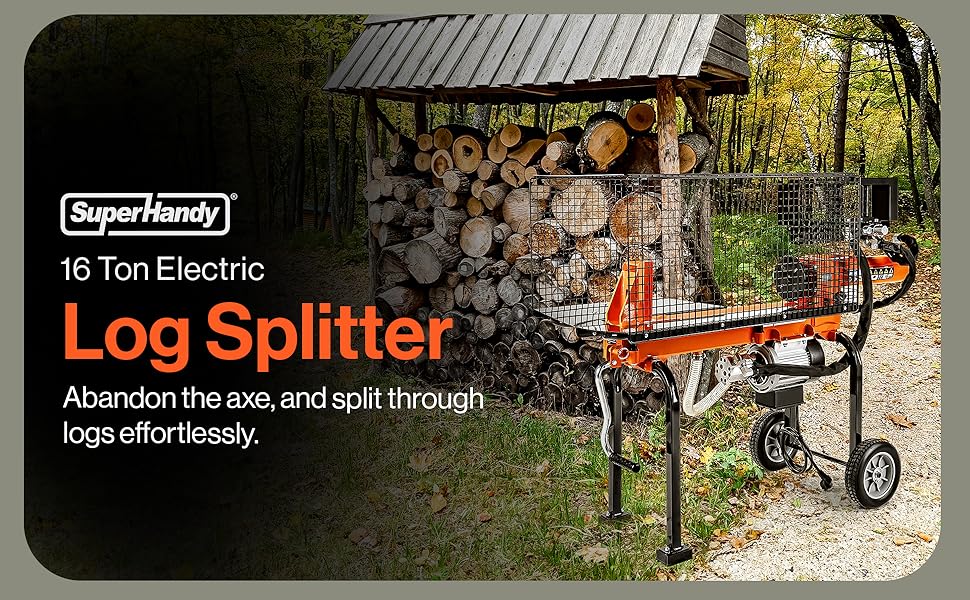
You want to use your Electric Log Splitter Portable safely and effectively. Electric log splitters can assist you significantly, but it is essential to be aware of the potential dangers. Safety is paramount every time you operate your log splitter. These safety tips and useful suggestions will help keep you safe and prevent damage to your Electric Log Splitter Portable.
Key Takeaways
-
Put on safety glasses and gloves to stop injuries from flying bits. - Look at your log splitter for any damage before you use it. This helps keep you safe. - Make sure your work area is clear and has good light. Keep children and pets away so no one gets hurt.
Wear Essential PPE
You need to put on protective gear before using your electric log splitter portable. This helps stop injuries and keeps you safe each time. The right gear protects you from flying bits, loud sounds, and sharp edges.
Safety Glasses and Gloves
Safety glasses keep your eyes safe from sawdust and wood chips. Small pieces can fly up when you split logs. These bits can hurt your eyes if you do not wear safety glasses. Gloves help you hold things better and protect your hands from splinters. Gloves also keep your hands safe from rough wood. The table below shows how each piece of protective gear helps you:
|
Equipment |
Purpose |
|---|---|
|
Safety Glasses |
Shield eyes from sawdust and wood chips |
|
Gloves |
Provide better grip and protect hands |
|
Hard Hat |
Protect against falling debris |
|
Hearing Protection |
Prevent noise damage from chainsaw |
|
Chainsaw Chaps |
Shield legs from accidental contact with chainsaw |
|
Protective Footwear |
Safeguard feet from injuries |
Tip: Always look at your safety glasses and gloves before you use them. Make sure there are no cracks or holes. Broken gear will not protect you well.
Hearing Protection
You should wear ear protection too. Electric log splitters can be very loud, especially if you use them for a long time. Ear defenders or earplugs help stop hearing loss. You can work better when you block out loud sounds. Always wear protective gear when you use your log splitter to stay safe.
Dress and Prepare Properly
Before you start splitting logs, you need to think about what you wear. The right clothing and footwear help you stay safe and comfortable. You should always check your outfit before using your electric log splitter portable.
Avoid Loose Clothing
Loose clothing can put you at risk when you use a log splitter. The moving parts of the machine can grab onto baggy sleeves, scarves, or untucked shirts. If your clothing gets caught, it can pull you towards the blades. This can cause serious injuries. Here are some dangers of wearing loose clothing:
-
Loose-fitted clothing can get caught in the log splitter's teeth.
-
The teeth are designed to grab wood logs, but they can also catch clothing.
-
If clothing gets caught, it may pull your body towards the blades.
-
This can potentially cause serious injury.
Tip: Choose fitted clothing that covers your arms and legs. Tuck in your shirt and avoid wearing jewellery or anything that dangles.
Sturdy Footwear
You need to protect your feet when you split logs. Heavy logs can fall, and sharp tools can slip. Thick work boots give your feet the best protection. Trainers or sandals do not offer enough safety. Look for these features in your footwear:
-
Thick work boots are essential to protect your feet during log splitting.
Strong boots help prevent cuts, bruises, and broken toes. Make sure your boots have good grip so you do not slip on wet grass or mud. Always check your boots for holes or worn soles before you start work.
Pre-Use Inspection
You should always check your log splitter before you use it. This helps you find problems early and keeps your machine safe. Checking your log splitter often is important for maintenance and safety.
Check for Damage
Look at your log splitter every time before you use it. Check for any signs of damage or wear. Look closely at the hoses, blades, and moving parts. Cracks, leaks, or loose bolts can cause accidents or make the machine work badly. If the hydraulic oil is low, the machine may shake or vibrate. Air in the hydraulic lines can make the log splitter weaker. Oil leaks can lower power and hurt the machine. Always check the oil level to stop damage. Open the bleed screw before you start to stop early wear. Use your log splitter on flat ground so the oil flows right.
Tip: Make these checks a habit every time you use your log splitter. This helps you find problems before they get worse.
Test Safety Features
It is important to check all safety features before you start. Test each safety feature to make sure it works. Many log splitters need you to use both hands to keep them safe. Check if the power cord is safe and not broken. Put the log splitter on flat, steady ground. Make sure your work area is tidy and clear. Wear gloves, safety glasses, and boots with steel toes to protect yourself. Read the manual for your log splitter to learn about all the safety features.
Good checks and care help your log splitter work well. These steps help you stay safe and get the job done right.
Safe Work Area Setup
Clear Space Near Wood Pile
You should place your electric log splitter portable close to your wood pile. This setup saves time and reduces the need to carry heavy logs across your garden. You work more efficiently and lower the risk of dropping logs or tripping. Always choose a stable, level surface for your machine. Uneven ground can cause the log splitter to wobble or tip over. Good lighting helps you see what you are doing and spot hazards quickly.
Tip: Use a chopping block or a hard surface under your log splitter. This protects your grass and keeps the machine steady.
Follow these steps for maximum safety and efficiency:
-
Position the log splitter near the wood pile.
-
Check that the ground is flat and firm.
-
Make sure the area is well-lit.
-
Wear personal protective equipment before you start.
Keep Children and Pets Away
You must keep children and pets away from your work area. Distractions can lead to accidents. The log splitter has moving parts that can cause injury if someone gets too close. Set up a clear safety zone around your machine. Ask family members to stay outside this area while you work.
-
Remove toys, tools, and other objects from the space.
-
Choose a location that will not disturb your neighbours with noise.
-
Never allow anyone to lean over the machine or touch logs during splitting.
Note: Always stay alert and keep your hands and feet clear of the splitting area.
A safe work area helps you focus and protects everyone nearby. You create a safer environment by following these simple steps.
Operation Log Splitter Tips
Follow Manufacturer’s Instructions
You should always use your log splitter as the manufacturer says. These rules help you stay safe and keep your electric log splitter portable working well. Read the instruction manual before you start. Check your log splitter for any damage. Make sure all parts are tight and secure. Pick a flat, steady place with no mess around. Put logs on the splitter bed and line them up with the wedge. Wait for the hydraulic system to finish before you take away split wood.
-
Look at the manual for how to set up and use it.
-
Check the power cord to see if it is safe.
-
Make sure there are no pets, children, or things in your work area.
-
Line up logs with the grain so they split easier.
-
Use both hands if your splitter needs it.
-
Check logs for nails or metal before splitting.
-
Turn off and unplug the machine when you finish.
Tip: Always wear gloves, safety glasses, and steel-toe boots to stay safe.
Stay Focused and Sober
You need to pay attention and not get distracted when you use your log splitter. Never use your log splitter if you feel sleepy or have had alcohol or drugs. These things make accidents more likely. Keep your hands and fingers away from cracks in logs while splitting. Stay alert and do not let your mind wander. Keep your work area quiet and free from things that might interrupt you.
-
Do not use the splitter if you feel tired.
-
Do not use the machine if you are distracted.
-
Point knots in the wood up to stop damage.
-
Make sure the splitter is flat so oil flows right.
Safety tips: If you stay focused and follow these log splitter tips, you will be safer every time you use your log splitter. These tips help protect you and your equipment.
Log Splitter Maintenance and Care
It is important to look after your log splitter. Regular care helps your machine work well for longer. If you look after it, you will have fewer problems. You will not need to pay for expensive repairs. Good maintenance means your log splitter runs smoothly and does not get damaged easily.
Clean After Use
Clean your log splitter after you finish using it. Wipe away wood chips, sap, and dirt with a brush or cloth. Dirt can block moving parts and make the machine less efficient. Check for leaks or loose bolts when you clean. Cleaning stops damage and keeps your log splitter working well. If you do not clean it, it can wear out faster and overheat. Repairs can cost a lot if you ignore cleaning. Keep your work area tidy and pick up leftover wood.
Tip: Clean your log splitter every time you use it. A clean machine works better and lasts longer.
Lubricate and Check Oil
Lubrication helps your log splitter stay in good condition. Oil stops parts from rubbing too much and getting too hot. Use hydraulic oils made for log splitters, like Forest Master Hydraulic Fluid. This oil helps your machine work well and stay strong. Always check the oil level and add more when needed. Change the hydraulic fluid after 50 hours of use, or up to 150 hours if you use better oil.
|
Maintenance Action |
Impact on Performance |
Recommended Frequency |
|---|---|---|
|
Replace hydraulic fluid with high-quality oil |
Makes your log splitter work up to 30% better |
Every 50 hours (or up to 150 hours with high-quality oil) |
|
Keep hydraulic system clean |
Stops problems and keeps the machine safe |
Keep doing this regularly |
|
Monitor fluid levels |
Helps your log splitter work its best |
Check often |
Check the electrical connections as well. Bad connections can make your log splitter work poorly and cause damage. If you do not look after your log splitter, it can wear out faster, overheat, and cost more to fix. Lubrication and checking help you avoid these problems and keep your log splitter working well.
-
Pumps, valves, and cylinders can wear out faster.
-
The machine may not work as well and use more energy.
-
Dirt can get inside and break parts.
-
Your log splitter may not last as long.
Follow these tips to get the best from your log splitter. Regular care makes your machine safer and more reliable.
Safe Log Handling
Proper Lifting Techniques
You need to use the right lifting techniques when handling logs. This helps you protect your back and avoid injuries. Start by standing with your feet shoulder-width apart. This gives you a stable base. Bend your knees and keep your back straight as you lower yourself to pick up the log. Always use your legs to lift, not your back. Hold the log close to your body. This reduces strain and helps you keep control. Make sure you have a firm grip with both hands before you lift. Turn your feet to change direction instead of twisting your back. If a log feels too heavy, use a trolley or ask for help.
-
Stand with feet shoulder-width apart for balance.
-
Bend your knees and keep your back straight.
-
Hold the log close to your body.
-
Avoid twisting your back; turn your feet instead.
-
Use both hands for a secure grip.
-
Use a trolley for heavy logs.
Tip: Push heavy loads rather than pull them. This keeps your posture upright and lowers the risk of injury.
Secure Log Positioning
You must secure each log properly on the log splitter before you start. Place the log flat and stable on the splitter bed. Use the ramstop if your machine has one. This saves time and helps you work more efficiently. Try to split the log slightly off centre. This makes splitting easier and puts less strain on the machine. Keep any knots in the wood pointing upward. This protects the log splitter from damage. Always keep the splitter level so the hydraulic system works well. Wear gloves for extra safety. Remember to avoid splitting seasoned logs, as they can splinter suddenly and cause injury.
-
Place the log flat and stable on the splitter bed.
-
Use the ramstop for efficiency.
-
Split the log slightly off centre.
-
Point knots upward.
-
Keep the splitter level.
-
Wear gloves for protection.
Note: Good log handling keeps you safe and helps your log splitter last longer.
You stay safe and your electric log splitter portable works well if you follow these safety tips. Looking after your log splitter helps it last longer. Wearing protective gear, keeping your area clean, and checking your machine often lowers the chance of accidents.
-
Protective gear stops you from getting hurt.
-
A clean, flat, and bright space helps prevent accidents.
-
Checking and caring for your log splitter keeps it safe.
-
Reading the manual shows you how to use it safely.
Do these things every time you use your log splitter for the best results.
FAQ
How often should you maintain your log splitter?
You should check your log splitter before each use. Clean and lubricate it after every session. Regular care helps your machine last longer.
Can you use an electric log splitter portable in wet weather?
You should avoid using your electric log splitter portable in rain or on wet ground. Water can damage electrical parts and make the area slippery.
What size logs can you split with a log splitter?
Most log splitters handle logs up to 25cm in diameter. Always check your machine’s manual for the correct size and never force oversized logs.