
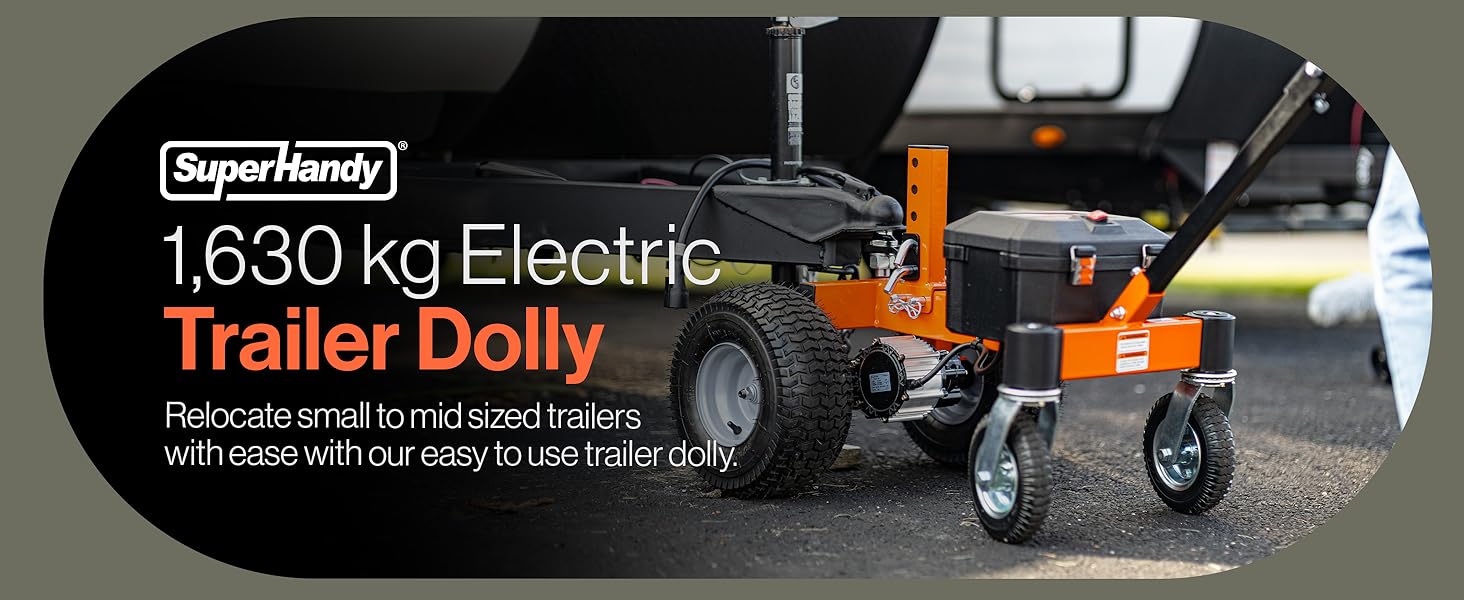
You must move your trailer safely, especially with an Electric Trailer Dolly 3600LBS Max Trailer. Always think about safety and follow important tips to stay away from common dangers. Be careful before you begin. Know the risk of emergencies. Learn how to use an emergency stop to stop injuries.
Key Takeaways
-
Always look at the weight limit of your electric trailer dolly. Staying under this limit helps you stay safe and stops accidents.
-
Check your dolly carefully before you use it. Look at the tyres, battery levels, and controls. Doing this lowers risks and keeps your equipment working well.
-
Use safety chains and make sure connections are tight when you attach your trailer. This extra step stops the trailer from coming off and makes moving it safer.
Electric Trailer Dolly 3600lbs Max Trailer Overview
What Is an Electric Trailer Dolly?
You use an electric trailer dolly to move heavy trailers with less effort. This machine has a motor that helps you push or pull your trailer. You control the speed and direction with simple buttons. The electric trailer dolly 3600lbs max trailer is a popular choice for many people. It can handle large loads and makes moving your trailer much easier. You do not need to use your car or truck for short moves. The trailer dolly works well in tight spaces where vehicles cannot fit.
The electric trailer dolly comes in different sizes. Each model has a weight limit. You must know the weight capacity before you start. Here is a table that shows the maximum trailer weight capacity for some popular models:
|
Model |
Max Trailer Weight Capacity |
Max Tongue Weight |
|---|---|---|
|
SuperHandy Electric Dolly |
7500LBS |
1100LBS |
|
SuperHandy Electric Dolly |
3600LBS |
600LBS |
Choosing the Right Dolly for Your Trailer
You must match your trailer dolly to your trailer’s weight. The electric trailer dolly 3600lbs max trailer is strong, but you should never go over its weight limit. If you do, you can lose control and cause an accident. Always check your trailer’s weight before you use the dolly. This keeps you safe and protects your equipment.
-
You keep control when you stay within the weight limit.
-
You make sure the trailer dolly works well and does not break.
-
You find it easier to move your trailer when you use the right electric trailer dolly 3600lbs max trailer.
You should always use a trailer dolly that matches your trailer’s size and weight. This helps you move your trailer safely and with confidence. The electric trailer dolly 3600lbs max trailer gives you the power you need for most medium and large trailers.
Safety Tips and Pre-Use Checks
You should always follow safety tips before moving your trailer. These tips help you stay safe and keep your trailer dolly working well. Always do checks before you start. Taking time to check things keeps you and others safe.
Inspecting for Damage and Tyre Pressure
Check your electric trailer dolly every time before you use it. Look for any cracks, rust, or loose parts. Check the tyres for cuts, bulges, or worn tread. Tyre pressure is very important. Use a gauge to see if the tyres have the right pressure. If the pressure is too low or not even, it can be hard to control the trailer dolly. Also, check the wheels for any wobble or damage.
Tip: Make a checklist for your inspection. Tick off each thing before you use your trailer dolly.
Battery Level and Controls Test
Check the battery level before you use the trailer dolly. If the battery is low, the trailer dolly might stop while you are moving. Make sure the battery is fully charged. Test all the controls. Try the forward, reverse, and stop buttons. If any button does not work, do not use the trailer dolly. Fix or replace broken parts before you use it.
-
Check the battery indicator.
-
Test all the movement controls.
-
Listen for any strange sounds when you use the trailer dolly.
Assessing Ground and Environment
Look at the ground before you move your trailer dolly. Only use the trailer dolly on flat, paved ground. Do not use it on gravel, grass, or mud. These surfaces can make the trailer dolly slip or get stuck. Never use the trailer dolly on slopes over 4 degrees. Steep slopes make it easy to lose control. Always look for things like stones, tools, or rubbish. Clear the path before you start.
Safety Alert: Uneven ground or steep slopes can cause accidents. Always pick a safe place to move your trailer dolly.
Think about how the weight sits on the trailer dolly. Make sure the load is even. Good weight balance helps you steer and stop safely. If the weight is too far forward or back, the trailer dolly can tip or become unstable.
Essential Pre-Use Checks Table
|
Check Item |
What to Look For |
Why It Matters |
|---|---|---|
|
Tyre Pressure |
Correct PSI, no damage |
Safe movement, good control |
|
Battery Level |
Fully charged, no leaks |
Prevents sudden stops |
|
Controls |
All buttons work, no delay |
Reliable operation |
|
Ground Condition |
Flat, paved, clear of debris |
Reduces risk of accidents |
|
Weight Distribution |
Even load on trailer dolly |
Stable and safe movement |
Always follow these safety tips and checks. This lowers risks and keeps your trailer dolly in good shape. Good habits make moving your trailer dolly safer and easier.
Attaching and Operating Electric Trailer Dolly
Secure Connection and Safety Chains
You must start every move with a strong and safe connection between your trailer dolly and your trailer. The right setup and attachment keep your trailer steady and help you avoid accidents. You can use a winch with a remote control to make towing easier, especially if you face a tricky slope. A front tow bar gives you better steering and helps you line up the trailer quickly. Many people find that using both a winch and a front tow bar gives the best control and keeps the connection secure.
Safety chains are vital for every move. These chains act as a backup if the hitch fails. They keep your trailer attached to the trailer dolly and stop it from rolling away. This extra step lowers the risk of detachment and boosts your safety. Always cross the safety chains under the hitch. This forms a cradle that catches the trailer if the hitch slips. Never skip this step, even for short moves.
Tip: Always double-check the safety chains before you move your trailer. A few seconds can prevent a big problem.
Step-by-Step Operating Tips
You need to follow a clear process to attach and operate your electric trailer dolly safely. Each step helps you avoid mistakes and keeps you ready for any emergency.
-
Position the Trailer Dolly
Place the trailer dolly in front of your trailer’s hitch. Make sure the ground is flat and clear. This gives you a stable base for the next steps. -
Align the Hitch and Dolly
Move the trailer dolly so the hitch lines up with the coupling point. Use the front tow bar for better control. Take your time to get a perfect fit. -
Connect the Hitch
Lower the trailer hitch onto the coupling. Lock it in place. Pull up on the hitch to check it is secure. If it moves, adjust it until it feels tight. -
Attach Safety Chains
Cross the safety chains under the hitch. Clip them to the trailer dolly’s hooks. Make sure there is enough slack for turns, but not so much that they drag. -
Use a Winch if Needed
If your trailer is heavy or the ground is uneven, use a winch with a remote control. This tool helps you pull the trailer into place without strain. -
Check All Connections
Inspect every link, latch, and chain. Look for loose parts or damage. Confirm that the hitch, safety chains, and any winch cables are tight and secure. -
Test the Controls
Turn on the electric trailer dolly. Test the forward, reverse, and stop functions. Press the emergency stop button to make sure it works. You must know how to use the emergency stop button in case of an emergency. -
Plan for Emergencies
Always keep the emergency stop button within reach. Tell anyone helping you where the emergency stop button is. If you see a problem, press the emergency stop button right away. -
Start Moving Slowly
Begin with slow, gentle movements. Watch the trailer and the trailer dolly for any signs of trouble. Stay alert for any emergency.
Note: If you hear strange noises or see the trailer shift, stop and check all connections again.
Quick Reference Table: Safe Attachment Steps
|
Step |
What to Do |
Why It Matters |
|---|---|---|
|
Position trailer dolly |
Place on flat ground |
Stable base for attachment |
|
Align hitch and dolly |
Use tow bar for control |
Accurate connection |
|
Connect hitch |
Lock and test for tight fit |
Prevents detachment |
|
Attach safety chains |
Cross under hitch, secure hooks |
Extra safety in emergencies |
|
Use winch if needed |
Pull trailer gently |
Reduces strain, better control |
|
Check all connections |
Inspect every part |
Avoids accidents |
|
Test controls |
Try all buttons, especially emergency |
Ready for any emergency |
|
Plan for emergencies |
Know emergency stop button location |
Quick response if needed |
|
Start moving slowly |
Watch for problems |
Safe and controlled movement |
You must always follow these steps when you move your trailer. Each step keeps you safe and helps you avoid an emergency. The trailer dolly gives you power and control, but you must respect its limits. Always use the emergency stop button if you feel unsafe or see a problem. Good habits and careful checks make every move safer.
Safe Manoeuvring and Safety Features
Controlling Speed and Direction
You need to control speed and direction all the time. Begin with slow moves. This helps you react if you see danger. Keep your hand on the controls. Watch your trailer and what is around you. Do not hurry. Quick moves can make the trailer dolly tip over. Always look ahead and think about your route. Turn gently if you need to change direction. Sharp turns can make the trailer tip or slip.
Navigating Flat Surfaces
Flat, paved ground is the safest place to move. Stay away from slopes and downhill paths. These places make it easier to lose control. The trailer dolly works best on smooth ground. Look for rubbish or things in the way before you start. Clear the path so you do not have an accident. If you see a slope, stop and choose a safer way. Never forget this advice. If you ignore safety features or use the trailer dolly on unsafe ground, you can have a bad accident.
Using Built-In Safety Features
You must use all safety features every time you use your electric trailer dolly. These features help stop accidents and keep you safe. The table below shows some important safety features and how they help:
|
Safety Feature |
Description |
|---|---|
|
Autodown Safety Feature |
Lowers rollers if not set, stopping cargo from moving during transit. |
|
Integrated Pallet Stops |
Stops cargo from rolling out during loading and unloading. |
|
Controlled Ramp |
Slows down pallets, making loading and unloading safer with forklifts. |
Safety features keep your trailer dolly steady and your cargo safe. Always check that these features work before you begin. If you skip them, you risk hurting yourself or others. Good habits and careful moves make every job safe.
Common Mistakes to Avoid
Overloading the Dolly
You might think your trailer dolly can handle a bit more weight, but this is a big mistake. Overloading the dolly puts you and your equipment at risk. When you put too much weight on your trailer dolly, several problems can happen:
-
You can lose control of the trailer dolly.
-
The trailer dolly can break or suffer damage.
-
Accidents become more likely.
Always check the weight of your trailer before you move your trailer. Stay within the limits set by the electric trailer dolly. This keeps you safe and protects your investment.
Tip: Never guess the weight. Use a scale or check your trailer’s manual for the correct numbers.
Skipping Safety Checks
Some people skip safety checks because they are in a hurry. This can lead to hazards. If you do not check your trailer dolly before each use, you might miss loose parts, low tyre pressure, or a weak battery. These small issues can cause big problems. Always inspect your trailer dolly before you start. Make safety checks a habit every time you use your trailer dolly.
Using on Unsafe Terrain
You should only use your trailer dolly on flat, paved ground. If you try to use it on gravel, grass, or steep slopes, you risk losing control. The trailer dolly can slip or get stuck. Unsafe terrain increases the chance of accidents. Always choose a safe surface before you move your trailer dolly. This simple step keeps you and others safe.
Maintenance Tips and Storage
Routine Inspection and Cleaning
You should always check your trailer dolly before and after each use. Cleaning your trailer dolly after every trip removes dirt, salt, and mud. These things can cause rust and damage. In wet or coastal areas, you need to use anti-rust treatments. This helps stop metal parts from wearing out. Lubricate all moving parts so your trailer dolly works smoothly. You should also check the torque of bolts and fittings. Loose bolts can make your trailer dolly unsafe. Regular inspection and cleaning help your trailer dolly last longer and keep you safe.
-
Remove dirt, salt, and mud after each use.
-
Apply anti-rust spray in damp or coastal places.
-
Lubricate moving parts for smooth operation.
-
Check bolts and fittings for tightness.
Tip: Make a checklist for your trailer dolly maintenance. This helps you remember each step.
Battery Care
You need to look after the battery in your trailer dolly. Always charge the battery after you move your trailer. Never let the battery run flat. Store the battery in a dry place when you are not using your trailer dolly. Check the battery for leaks or damage. Replace it if you see any problems. A healthy battery keeps your trailer dolly ready for safe use.
Safe Storage Practices
You must store your trailer dolly in a safe place. Choose a dry, covered spot for parking. This keeps your trailer dolly away from rain and sun. Always park your trailer dolly on a flat surface. Use wheel chocks to stop it from rolling. Keep the area around your trailer dolly clear. This helps you avoid accidents when parking or moving your trailer dolly. Lock your trailer dolly if you leave it outside. Good storage keeps your trailer dolly in top shape and supports safety every time you use it.
|
Storage Tip |
Why It Matters |
|---|---|
|
Dry, covered parking |
Stops rust and weather damage |
|
Flat surface parking |
Prevents rolling or tipping |
|
Wheel chocks for parking |
Adds extra safety |
|
Clear area for parking |
Reduces trip hazards |
|
Lock when parking outside |
Prevents theft |
Safety Alert: Never park your trailer dolly on a slope. Always choose a safe, flat spot for parking.
You make things safer when you use your trailer dolly the right way. If you check your trailer dolly often, you can find problems with brakes, tyres, or lights early. This means you are less likely to have an accident. Keeping your trailer dolly in good shape helps you move your trailer easily and safely. Always use your electric trailer dolly carefully.
-
Checking often keeps brakes working and tyres safe.
-
Bright lights help people see your trailer dolly.
FAQ
How often should you check tyre pressure on your electric trailer dolly?
You should check tyre pressure before every use. Proper pressure helps you control the dolly and keeps you safe.
Can you use an electric trailer dolly on gravel or grass?
You should not use the dolly on gravel or grass. Flat, paved surfaces give you better control and reduce the risk of accidents.
What should you do if the battery runs low during use?
Stop moving the trailer. Charge the battery fully before you continue. This prevents sudden stops and keeps your equipment safe.